

Sustainable Takeout Packaging for Restaurants: Boxes, Wraps & Stickers
Delivery and takeout are permanent revenue lines for most restaurants — and takeout packaging is your front door when there is no dining room involved. Sustainable, well-branded boxes, wraps, and stickers protect food quality, communicate values, and show up in customer photos every night.
This guide helps independent restaurants and ghost kitchens choose sustainable takeout packaging that performs in transit, meets customer expectations, and stays affordable in small production runs.
Essential Takeout Packaging Formats
| Format | Typical use | Why it matters |
|---|---|---|
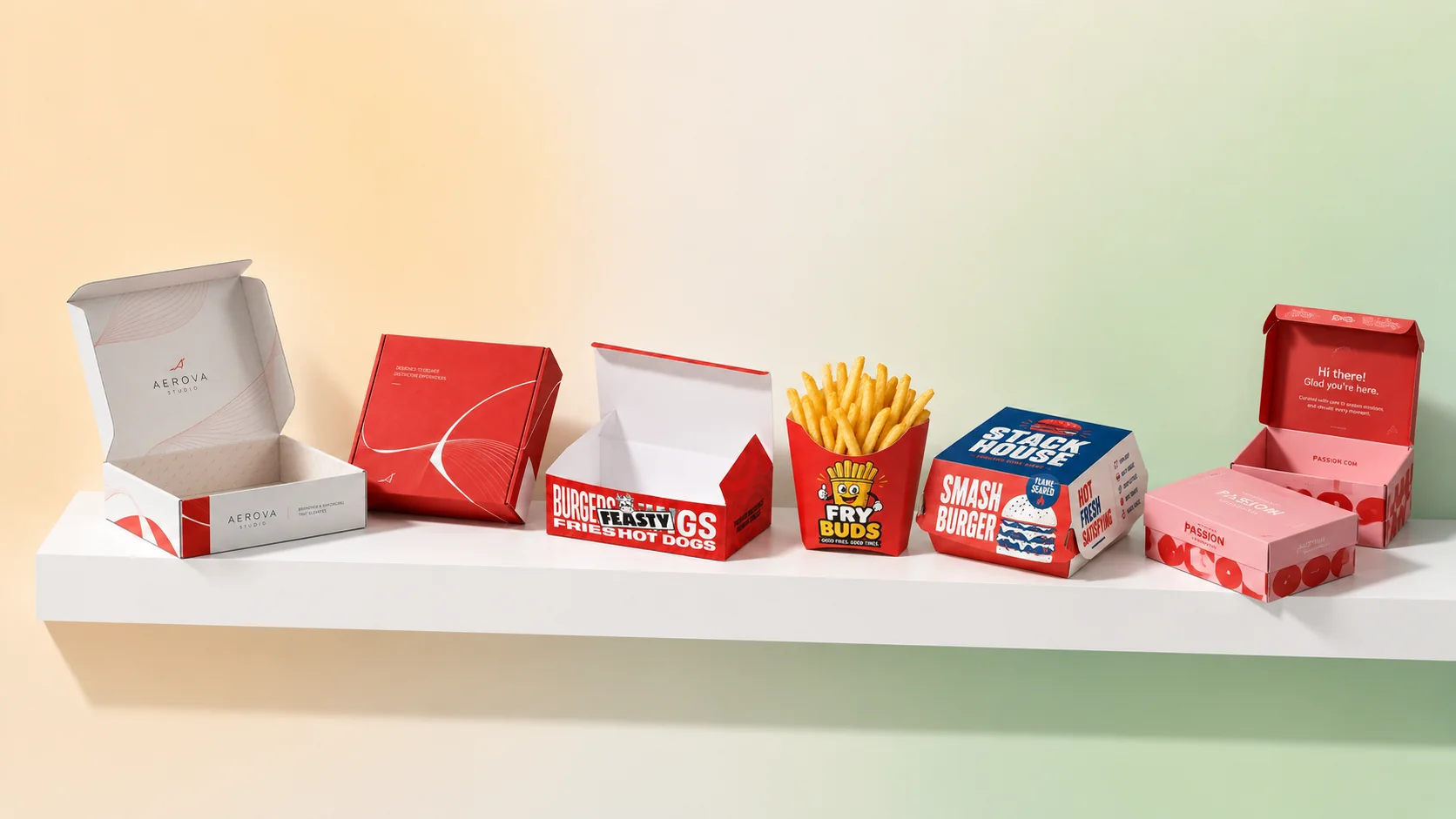
| Food boxes and clamshells | Entrees, noodles, rice bowls, combo meals | Structure, heat retention, sauce containment |
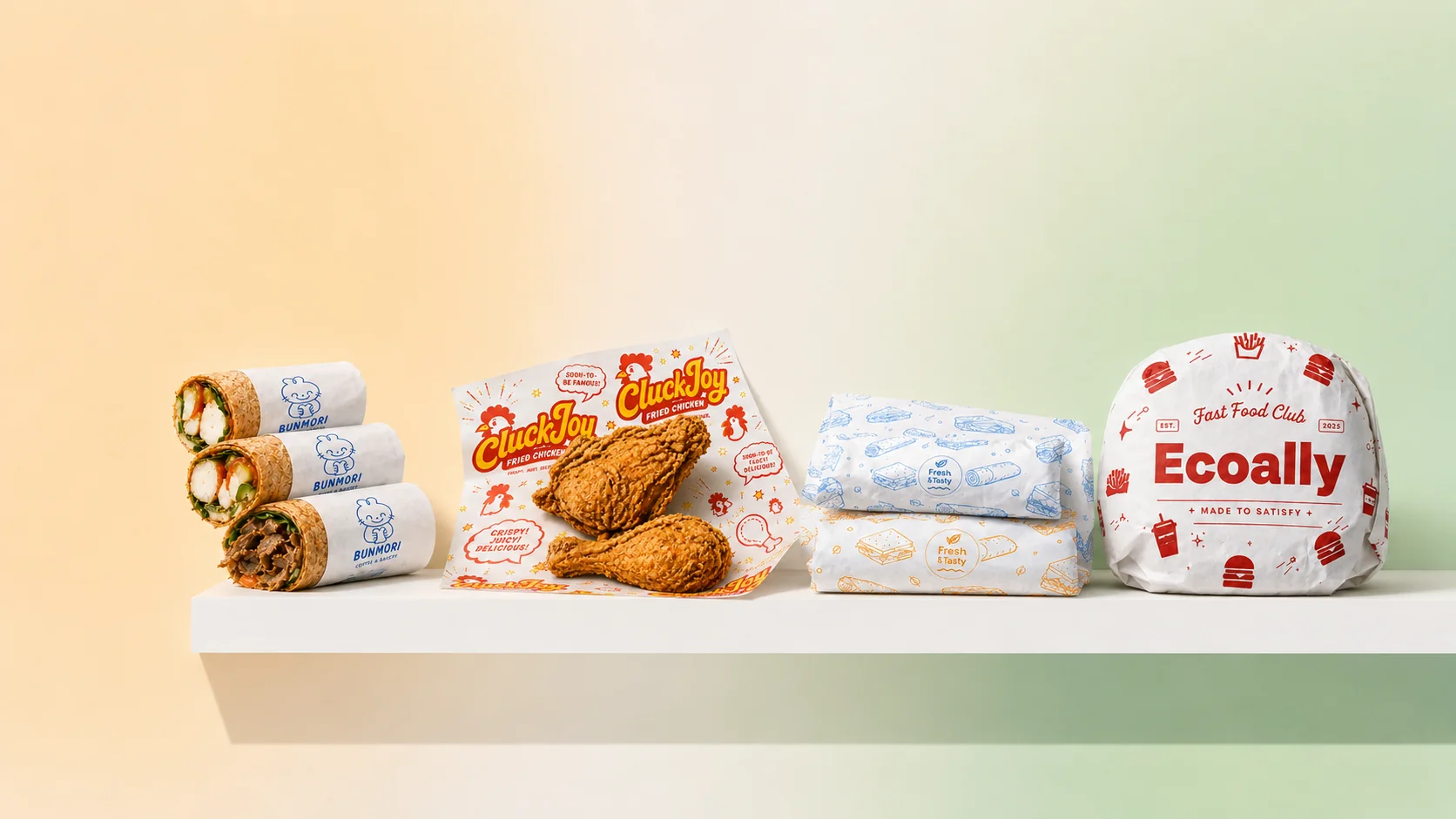
| Wrapping paper and liners | Burgers, sandwiches, tacos, baked goods | Grease management, brand pattern at unwrapping |
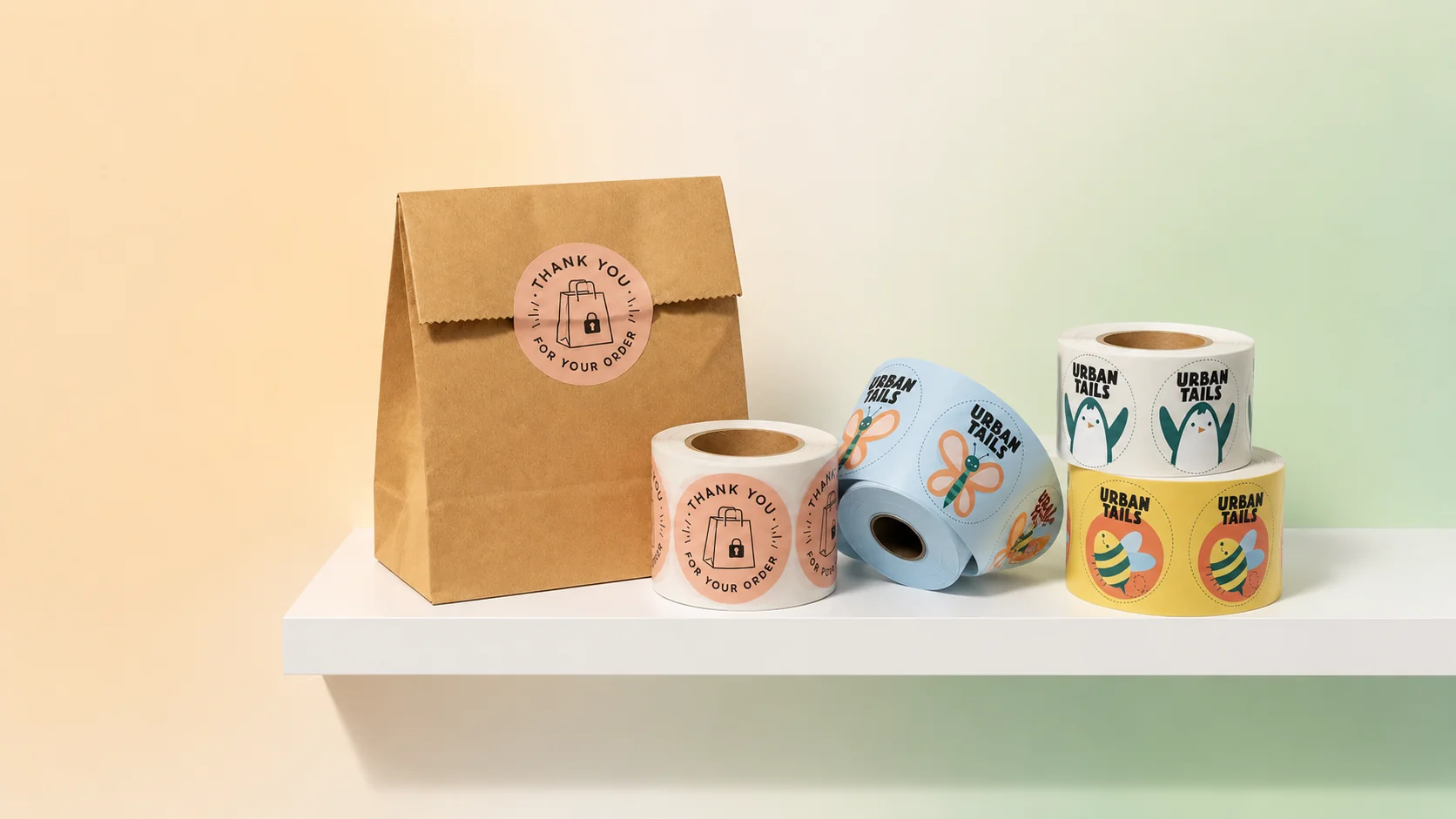
| Stickers and seals | Bag closure, tamper evidence, promo codes | Trust + marketing in delivery handoff |
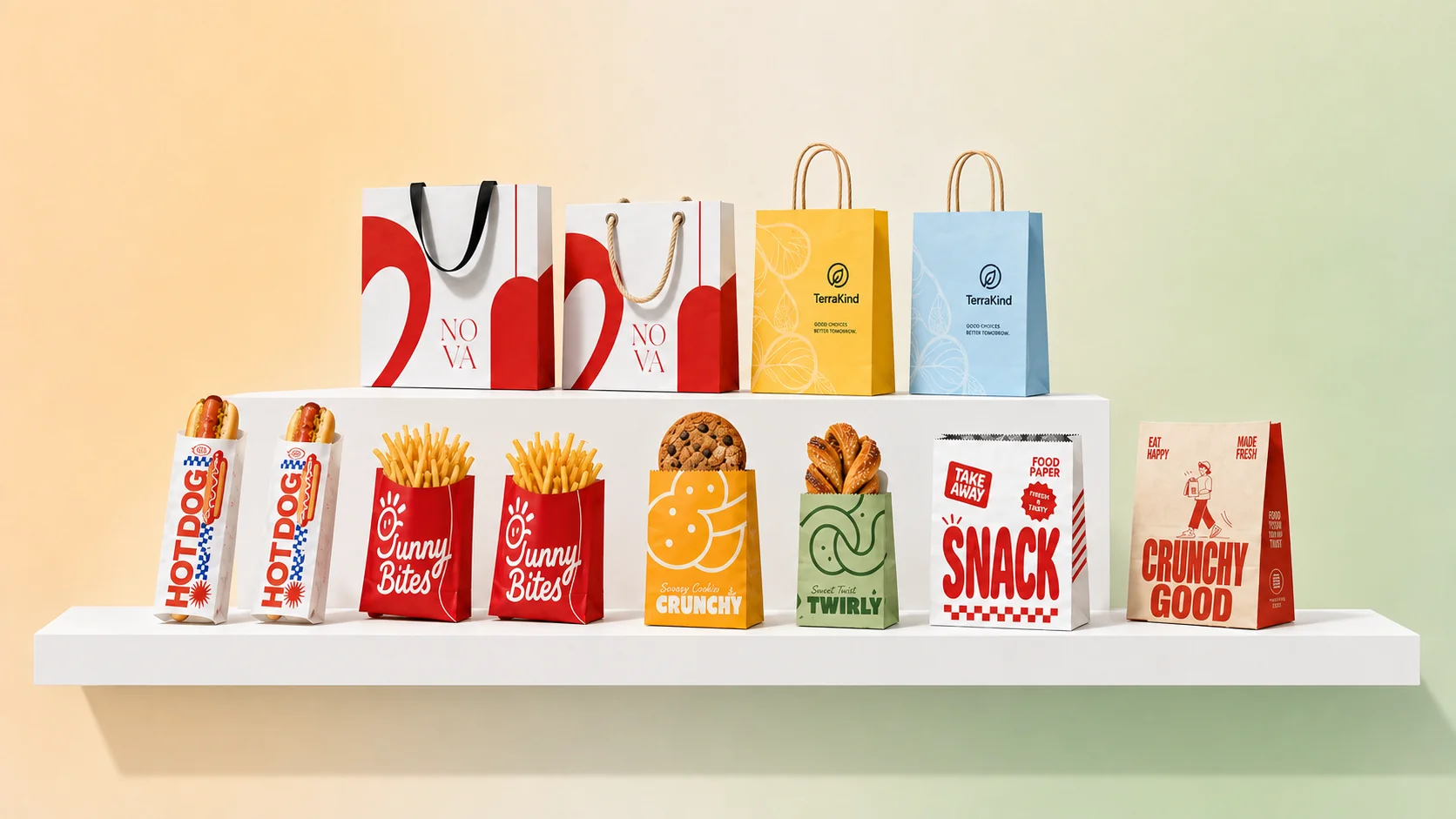
| Takeout bags | Multi-item orders, utensils, condiments | Street-visible branding, handle strength |
Browse Restaurants industry packaging for formats mapped to your service style.
Sustainability That Works in Real Operations
"Sustainable takeout packaging" only works if it survives the line, the driver, and the customer's disposal habits.
Match material to menu physics
- Greasy or saucy items — grease-resistant paper, appropriate board weight, or certified compostable clamshells rated for hot food
- Crispy items — vented boxes or wraps that manage steam without soggy fries or buns
- Cold items — kraft wraps, recyclable board, or clear containers where product specs allow
See material tradeoffs in our biodegradable and compostable guide.
Be honest about disposal
Recyclable kraft and paperboard work well when customers have curbside paper recycling. PLA and bagasse often need industrial composting — say so on a sticker or sleeve. Clear guidance beats vague "eco" claims.
Reduce over-packaging
Right-sizing boxes cuts material cost and waste. Start with two or three box sizes that cover most of your menu instead of six partial-empty containers.
Branding Takeout Without a Big Agency Budget
Logo-forward boxes and bags
A strong logo and one accent color on kraft read premium for independents. Use Ecoally's 3D editor to validate placement before print.
Wraps as affordable brand surface
Custom food wrapping paper covers large areas per unit — ideal for repeating patterns, brand marks, or subtle textures customers notice when unwrapping.
Stickers for campaigns and delivery trust
Tamper-evident stickers add security for third-party delivery and carry promo codes, social handles, or "thank you" messages cheaply across order volumes.
Consistency across channels
Match packaging to your menu PDF, Google Business photos, and delivery app listing. Consistency increases reorders because customers remember the whole experience.
Low MOQ for Seasonal Menus and Ghost Kitchens
Restaurants change menus faster than traditional packaging MOQs allow. Limited-time bowls, collab drops, and new virtual brands need small batch custom packaging — not a warehouse of obsolete boxes.
Low MOQ helps you:
- Launch a LTO (limited-time offer) with matching packaging
- Test a ghost kitchen sub-brand before investing in mass inventory
- Refresh design after a rebrand without sinking cost in old stock
Learn more in Why Low MOQ Packaging Is a Game-Changer for Small Food Businesses.
Practical Rollout Plan for Restaurant Operators
- Map your top ten SKUs by volume — boxes and wraps should fit those items first.
- Standardize two box sizes and one bag size to simplify inventory.
- Design one cohesive system — box exterior, wrap pattern, and sticker color share the same palette.
- Preview and sample — Use 3D preview and small test orders before a full menu switch.
- Train the line — Label storage so evening rush uses the right format every time.
- Reorder winners — Scale quantity on the formats that survive operations feedback.
Frequently Asked Questions
What is the most sustainable takeout packaging for restaurants?
It depends on your menu and local waste infrastructure. Recyclable paperboard and kraft are widely accessible; compostable fiber and PLA work when disposal is clearly communicated and supported.
Can independent restaurants order custom boxes in small batches?
Yes. Ecoally supports low MOQ on many packaging products so independents and ghost kitchens can brand takeout without massive upfront orders.
How do I prevent delivery leaks and sogginess?
Choose material weight and format rated for your sauciest items, use appropriate liners, and right-size containers so food is not sliding in oversized boxes.
Can I customize packaging for multiple virtual brands from one kitchen?
Yes. Low MOQ runs let you maintain distinct box or sticker designs per brand without shared inventory confusion.
Where should I start browsing products?
Visit Restaurants industry packaging or the full product catalog.
Should dine-in and delivery use the same packaging?
Many restaurants use identical boxes for consistency, but some add delivery-only stickers or bag liners for tamper evidence. Start with one box system, then add delivery-specific seals if platform ratings suggest it.
Sustainable takeout packaging is operations, marketing, and customer trust in one decision. Start with the formats your menu uses every night, design them once in 3D, and scale batches as delivery volume grows.
Next step: Explore restaurant packaging or design custom packaging online.
Measuring Packaging ROI for Takeout and Delivery
Packaging is not only a cost line — it affects repeat rate, average review scores, and social reach.
Review keywords: Track delivery reviews mentioning "packaging," "leak," or "presentation." A one-point lift in food-arrival presentation often correlates with fewer refund requests on delivery platforms.
Social impressions: Encourage photogenic unboxing with consistent box exteriors and wrap patterns. One recognizable kraft box with a bold logo can appear in customer stories without a paid influencer campaign.
Cost per branded touchpoint: Divide your packaging spend by weekly order count. Compare that to paid social CPM — branded boxes often deliver competitive visibility when designed well and reused in customer content.
Iteration cycle: Run quarterly packaging reviews with kitchen leads: which box sizes fail, which stickers peel in heat, which wraps tear on the line. Small MOQ reorders make fixes affordable between seasons.


