
A Complete Guide to Biodegradable & Compostable Packaging Materials
Choosing eco-friendly packaging material can be confusing. Terms like "biodegradable," "compostable," and "recyclable" are often used interchangeably in marketing copy, but they mean very different things for disposal, compliance, and customer trust.
This guide breaks down the most common sustainable food packaging materials — what they are made of, when to use them, and how to pick the right option for your cafe, bakery, or restaurant.
Biodegradable vs Compostable vs Recyclable
| Term | What it means | Typical disposal | Good for food brands when… |
|---|---|---|---|
| Recyclable | Can be reprocessed into new material | Curbside or drop-off recycling (if clean and accepted locally) | You want wide consumer access and paper-based formats |
| Compostable | Breaks down in composting conditions within a set timeframe | Industrial compost facility (often required for PLA and bagasse) | You can communicate clear compost guidance to customers |
| Biodegradable | Breaks down naturally over time (no fixed standard in all markets) | Varies widely; may not suit home compost | Use carefully — prefer certified compostable claims when possible |
For US food brands, clarity matters more than buzzwords. Tell customers exactly how to dispose of your packaging, and match material choice to what your city actually supports.
Kraft Paper
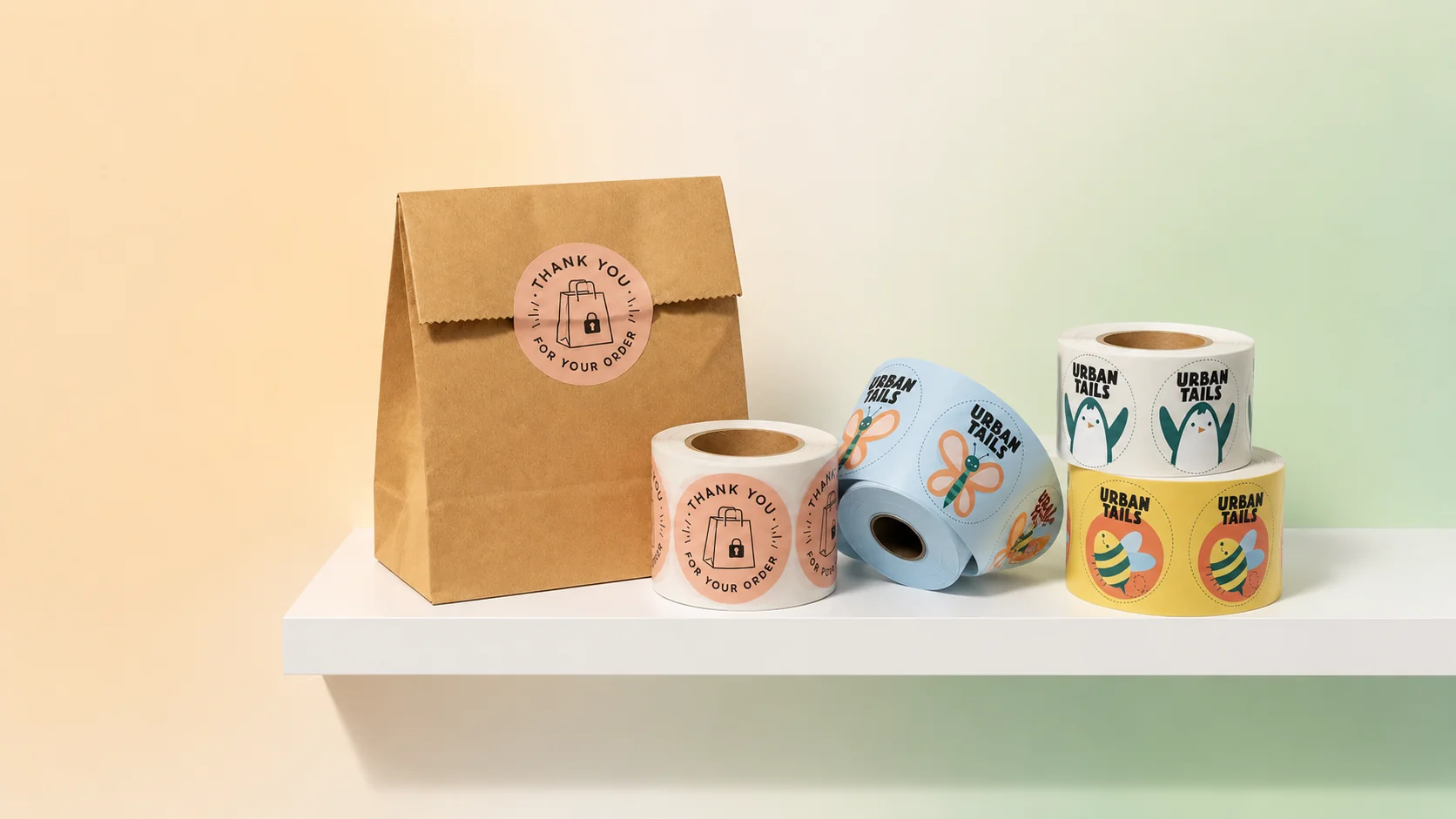
Kraft paper is the workhorse of sustainable food packaging. Made from wood pulp, it is strong, printable, and widely accepted in paper recycling streams when free of heavy food grease or plastic liners.
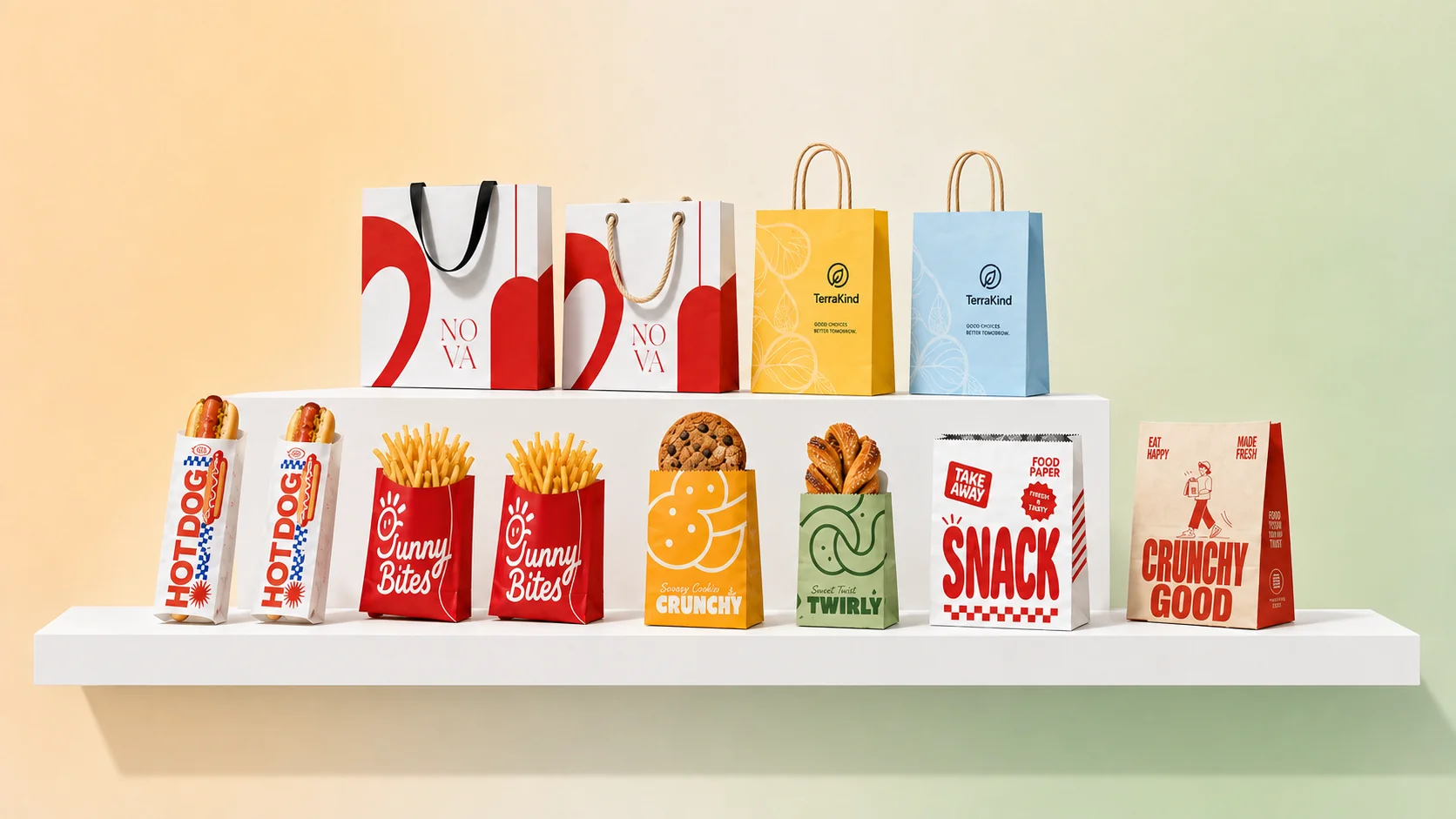
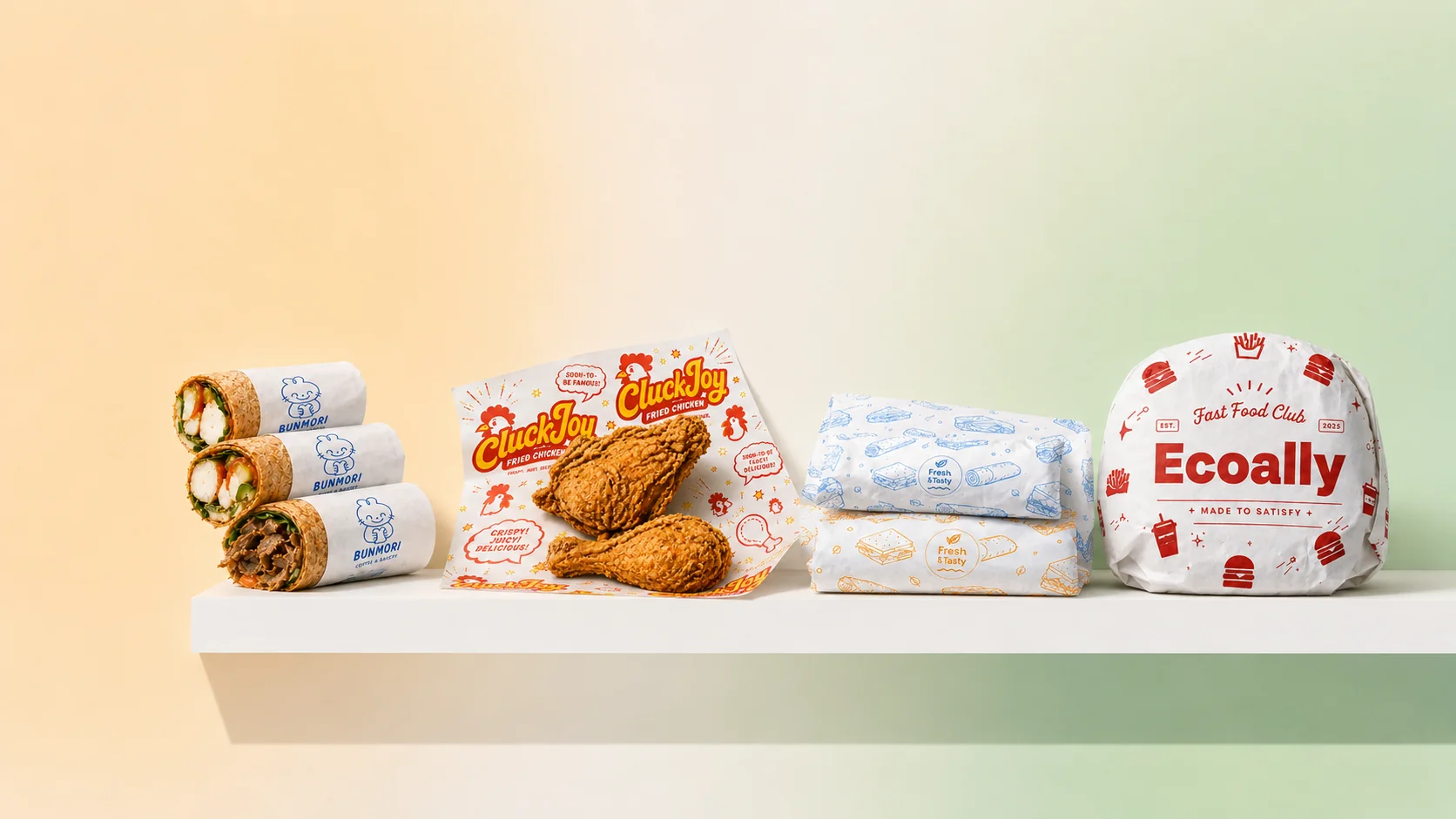
Best uses: Paper bags, food wraps, bakery bags, shopping totes, and outer box wraps.
Pros: Natural unbleached look signals eco values; cost-effective; excellent print surface for logos and one- or two-color brand marks.
Cons: Not ideal alone for very greasy or wet foods without a liner or inner wrap; moisture-sensitive without coating.
Tip for small brands: Kraft pairs well with minimalist logo prints — less ink, faster turnaround, and a premium artisan aesthetic that works for cafes and bakeries.
Corrugated Cardboard
Corrugated cardboard uses a fluted middle layer between liner boards for strength. It is the standard for shipping boxes, meal kits, and rigid food cartons.
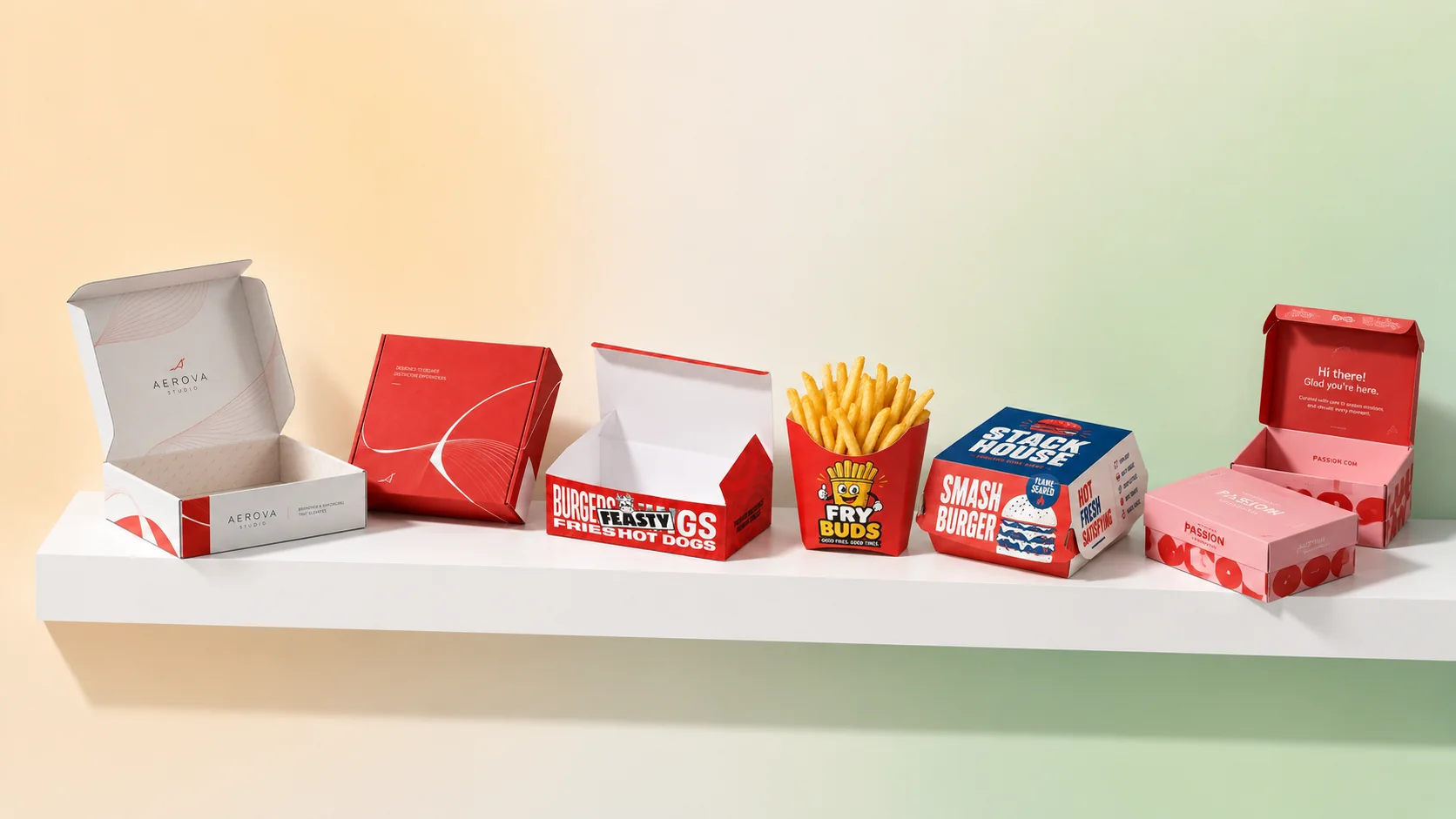
Best uses: Takeout meal boxes, shipping mailers, multi-item catering trays, and retail unboxing sets.
Pros: High recyclability in most US markets; excellent structural protection; easy to brand with exterior print.
Cons: Takes more storage space flat-packed vs bags; may need food-safe liners for direct contact with oily foods.
PLA (Polylactic Acid)
PLA is a plant-based plastic typically derived from corn starch or sugarcane. It can look and feel like conventional clear plastic — common in cups, clamshells, and cold-food containers.
Best uses: Clear cups, lids, cold salad containers, and transparent windows when paper is not suitable.
Pros: Plant-based origin; commercially compostable in facilities that accept PLA.
Cons: Requires industrial composting in most cases — not standard curbside recycling; heat-sensitive (not for hot liquids unless product-rated).
Label carefully: If your city lacks industrial compost access, PLA can confuse consumers. Pair with on-pack disposal instructions.
Bagasse
Bagasse is fiber leftover from sugarcane processing. It is sturdy, often microwave-safe, and used for molded plates, bowls, and clamshell containers.
Best uses: Hot takeout containers, plateware, and bowl formats for restaurants and fast-casual brands.
Pros: Compostable in many commercial facilities; good hot-food performance; renewable agricultural byproduct.
Cons: Can feel less premium than custom-printed paper boxes; print branding area may be limited vs flat paper stock.
Bamboo Fiber
Bamboo fiber packaging is made from fast-growing bamboo pulp. It offers a premium tactile feel and is marketed toward upscale eco brands.
Best uses: Premium gift boxes, boutique retail packaging, and limited-run specialty items.
Pros: Renewable; distinctive texture; strong sustainability story.
Cons: Higher cost than kraft; less common in low-MOQ digital print workflows.
How to Choose the Right Material for Your Product
Use this decision flow:
- Food contact and temperature — Hot, greasy, or liquid foods need material rated for that use (bagasse or coated board vs plain kraft).
- Disposal reality — Match material to what your customers can actually do: curbside paper recycling vs industrial compost.
- Brand and unboxing — Flat paper and cardboard offer the most design freedom for logos, patterns, and custom print.
- Budget and MOQ — Paper-based formats are usually the most accessible entry point for small batches. See our guide on low MOQ packaging for small food businesses.
- Regulatory and certification needs — Some retailers and marketplaces ask for FSC, BPI compostable certification, or food-contact compliance documentation from suppliers.
When in doubt, start with kraft paper bags or recyclable paperboard for dry and lightly greasy items — then expand into compostable containers where your operations and local waste infrastructure support it.
Material Pairings by Food Type
| Food type | Common packaging | Suggested materials |
|---|---|---|
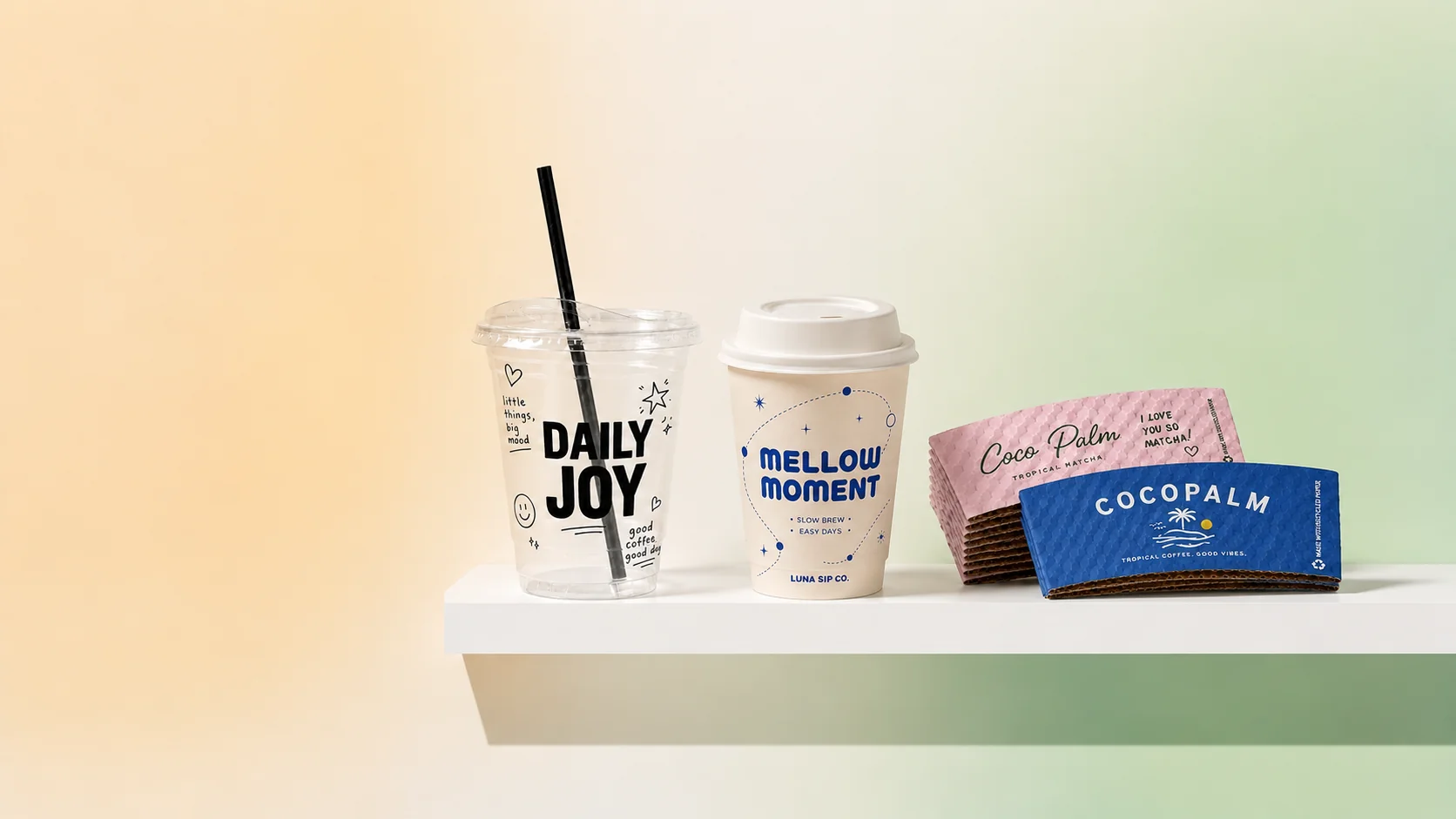
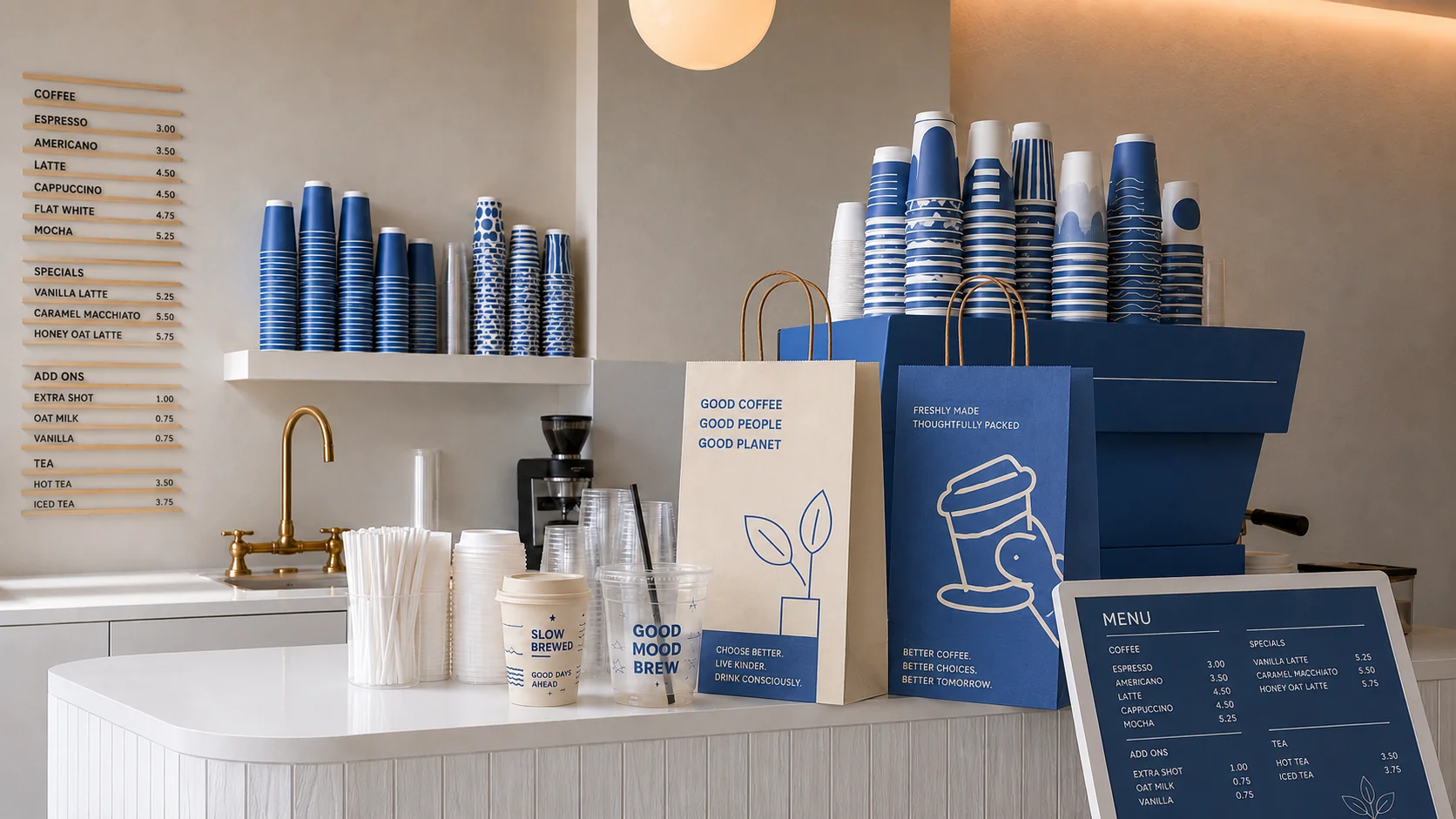
| Coffee and pastries | Cups, sleeves, bags | PLA or paper cups; kraft bags; recyclable sleeves |
| Sandwiches and salads | Boxes, wraps, stickers | Corrugated or paperboard boxes; kraft wraps; paper labels |
| Hot noodles and rice bowls | Clamshells, bowls | Bagasse or certified compostable molded fiber |
| Bakery bread and cookies | Bags, boxes, tissue | Kraft bags; greaseproof paper; recyclable cartons |
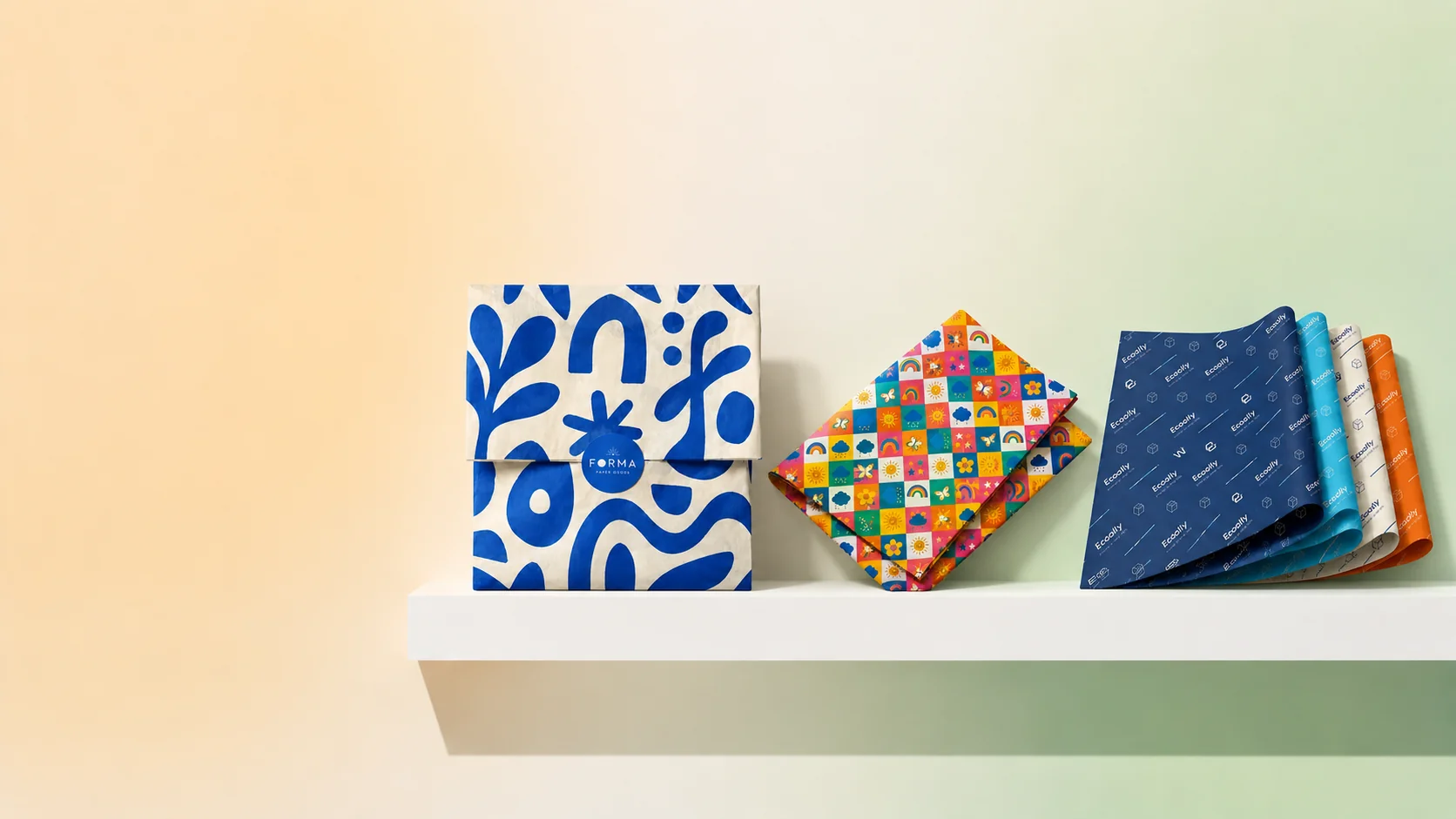
| Retail and gifting | Bags, tissue, tape | Kraft or FSC paper; custom tissue |
Explore industry packaging pages for cafe, bakery, and restaurant-specific combinations.
Frequently Asked Questions
Is compostable packaging always better than recyclable paper?
Not automatically. Recyclable kraft paper is often the most practical choice when industrial composting is unavailable. The "best" material depends on your food type, local waste systems, and how clearly you can educate customers.
Can I print my logo on compostable containers?
Yes, on many paper and board formats. Molded fiber containers may have limited print areas — check product specs before designing.
What is the difference between biodegradable and compostable labels?
Compostable claims usually reference a standard and timeframe under composting conditions. Biodegradable is a broader term with inconsistent regulation. For customer-facing messaging, certified compostable or widely recyclable is clearer.
Does Ecoally offer sustainable packaging options?
Yes. Ecoally offers paper-based and recyclable packaging including kraft paper bags, food papers, tissue paper, wrapping paper, and related sustainable formats. Browse products to compare materials per item.
How do I design artwork for sustainable packaging?
Upload your logo and preview print placement in Ecoally's 3D editor before ordering samples or production runs.
Sustainable packaging is not one material — it is the right material for your food, your customer, and your disposal story. Start with clarity, test with small runs, and scale what works.
Next step: Browse sustainable packaging products or read how coffee shops choose branded packaging.


