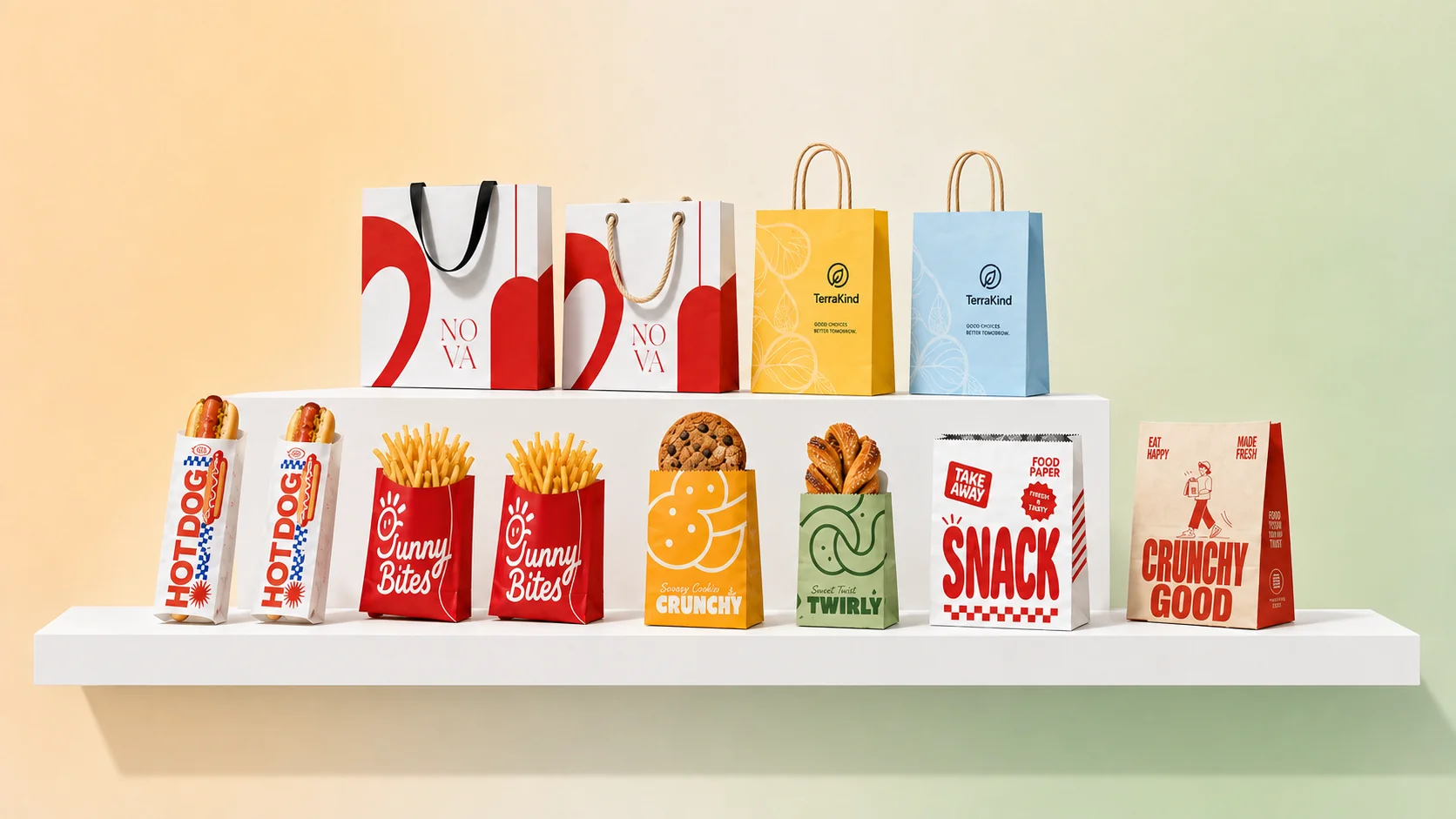
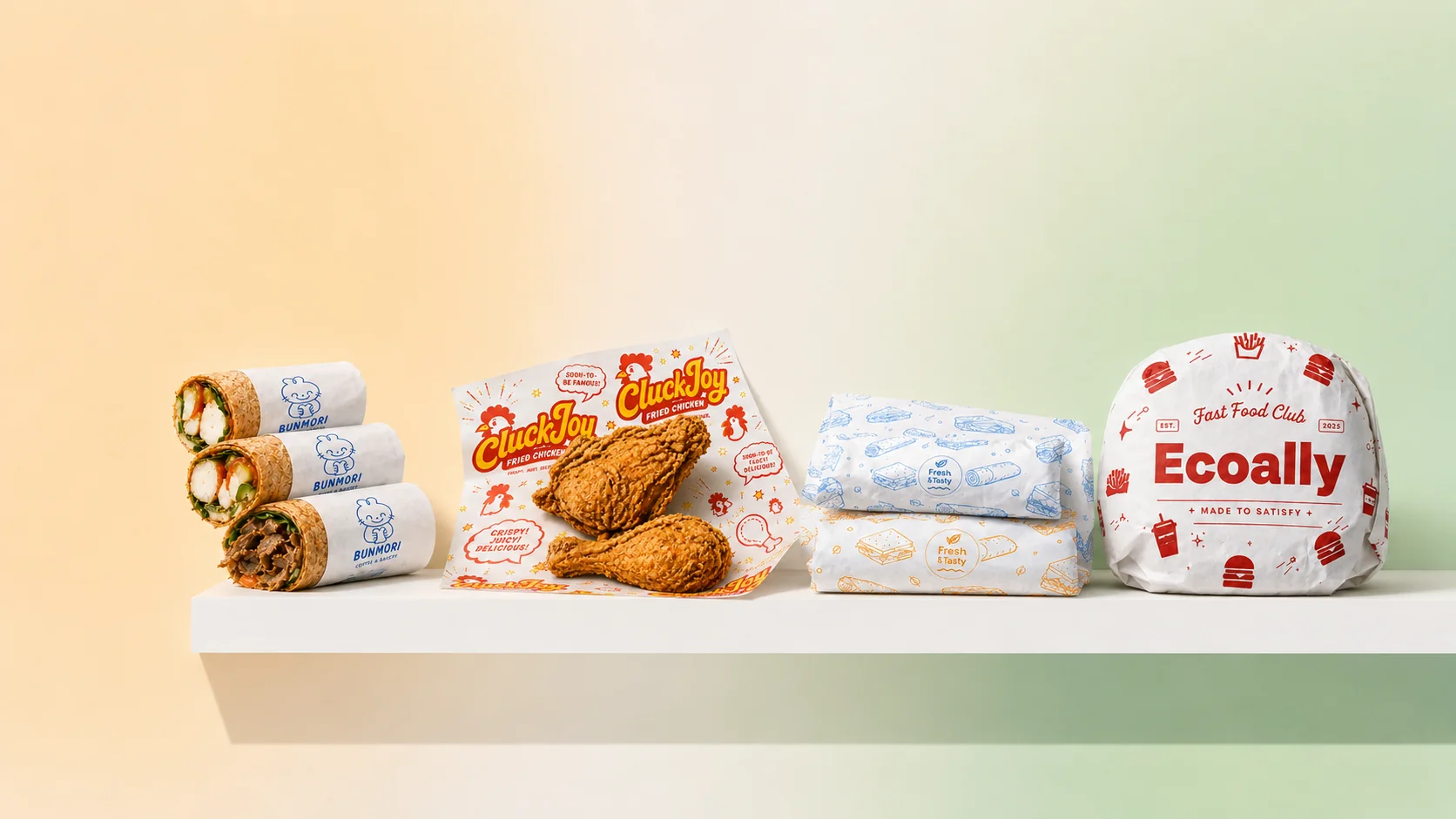
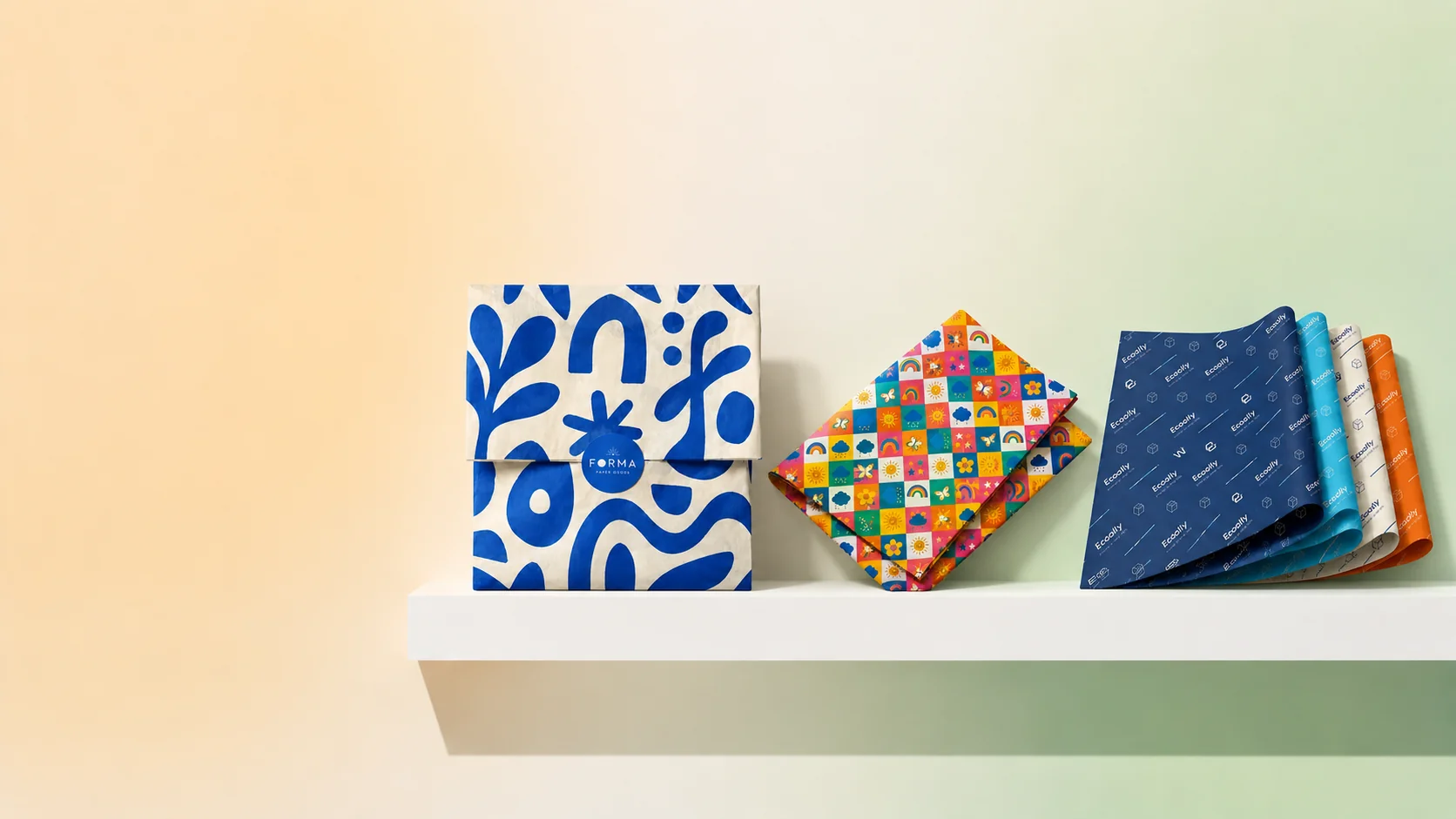
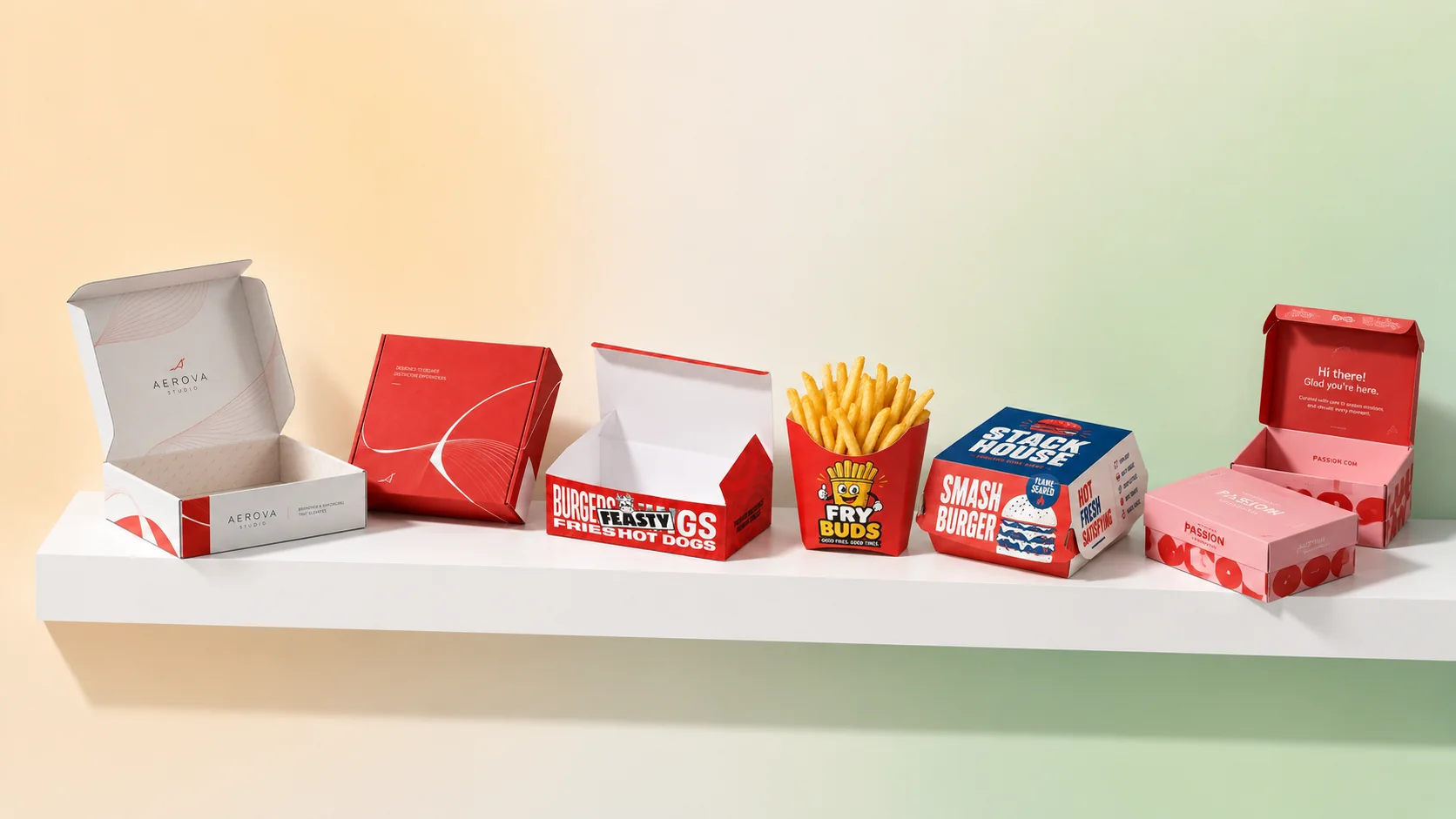

Custom Coffee Shop Packaging: Cups, Sleeves, Bags & Labels
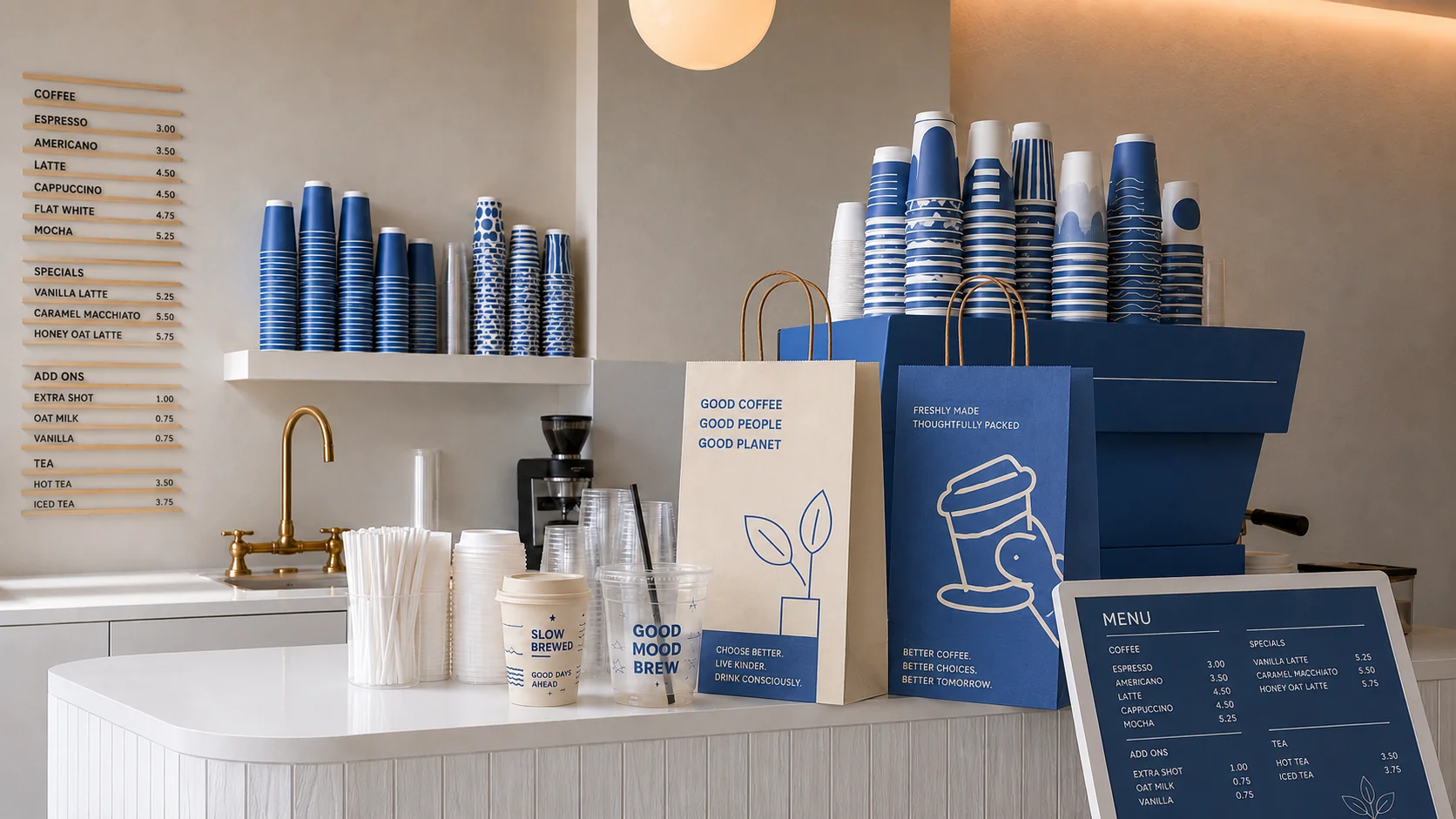
Your coffee shop competes on more than roast quality — every takeaway order is a branding moment. Custom coffee shop packaging turns cups, sleeves, bags, and labels into a consistent experience customers recognize on the counter, in the car, and in social photos.
This guide covers the packaging formats independent cafes use most, how to prioritize a limited budget, and how to launch branded packaging without five-figure minimum orders.
The Core Coffee Shop Packaging Kit
Most cafes build their system around four touchpoints:
| Format | Role | Branding impact |
|---|---|---|
| Hot cups | Primary handheld brand carrier | High — logo visible in walk-around traffic |
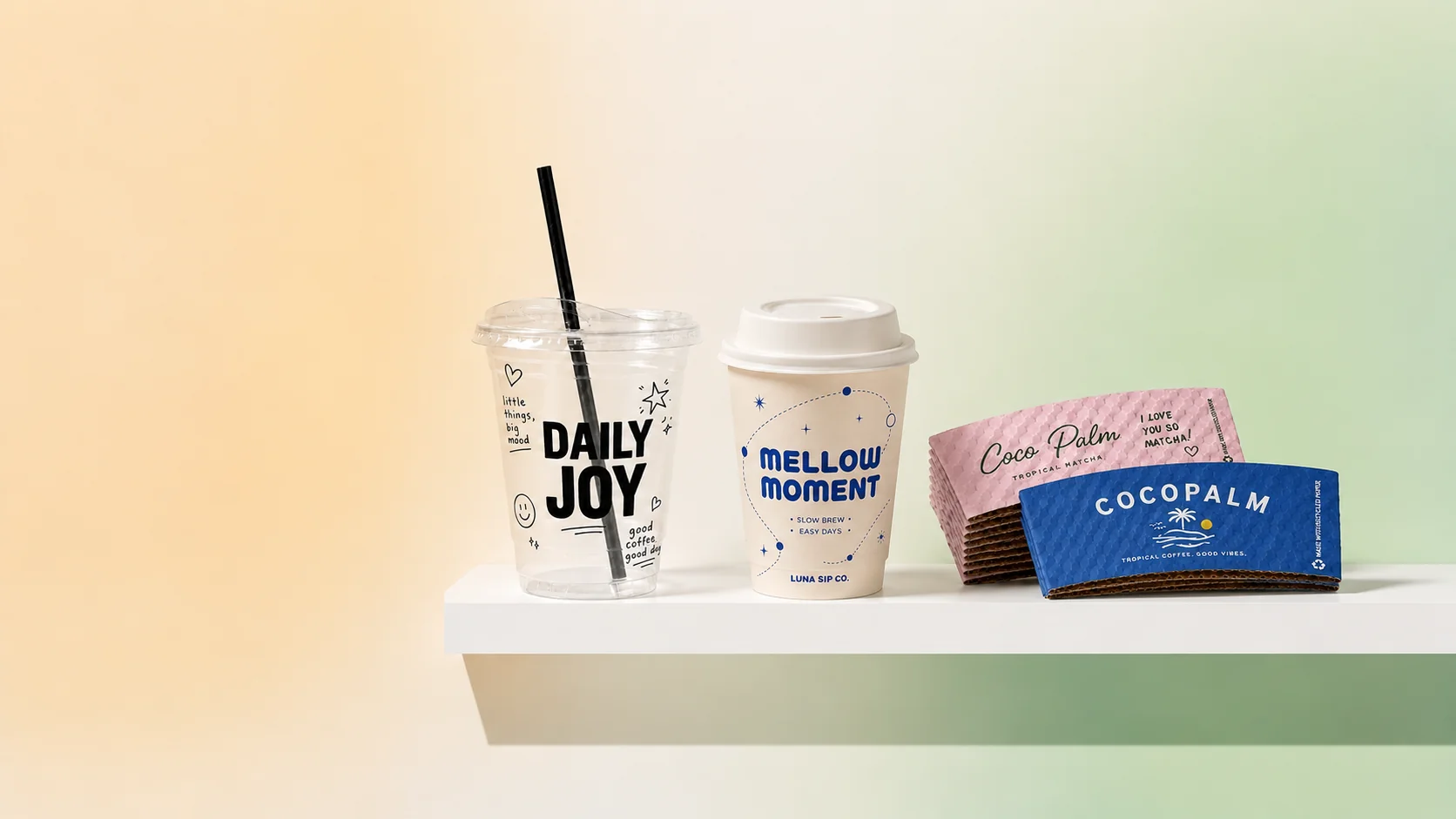
| Cup sleeves | Insulation + secondary print surface | Medium-high — extra space for QR codes or seasonal art |
| Takeout bags | Multi-item orders and pastry add-ons | High — large print area, reusable visibility on the street |
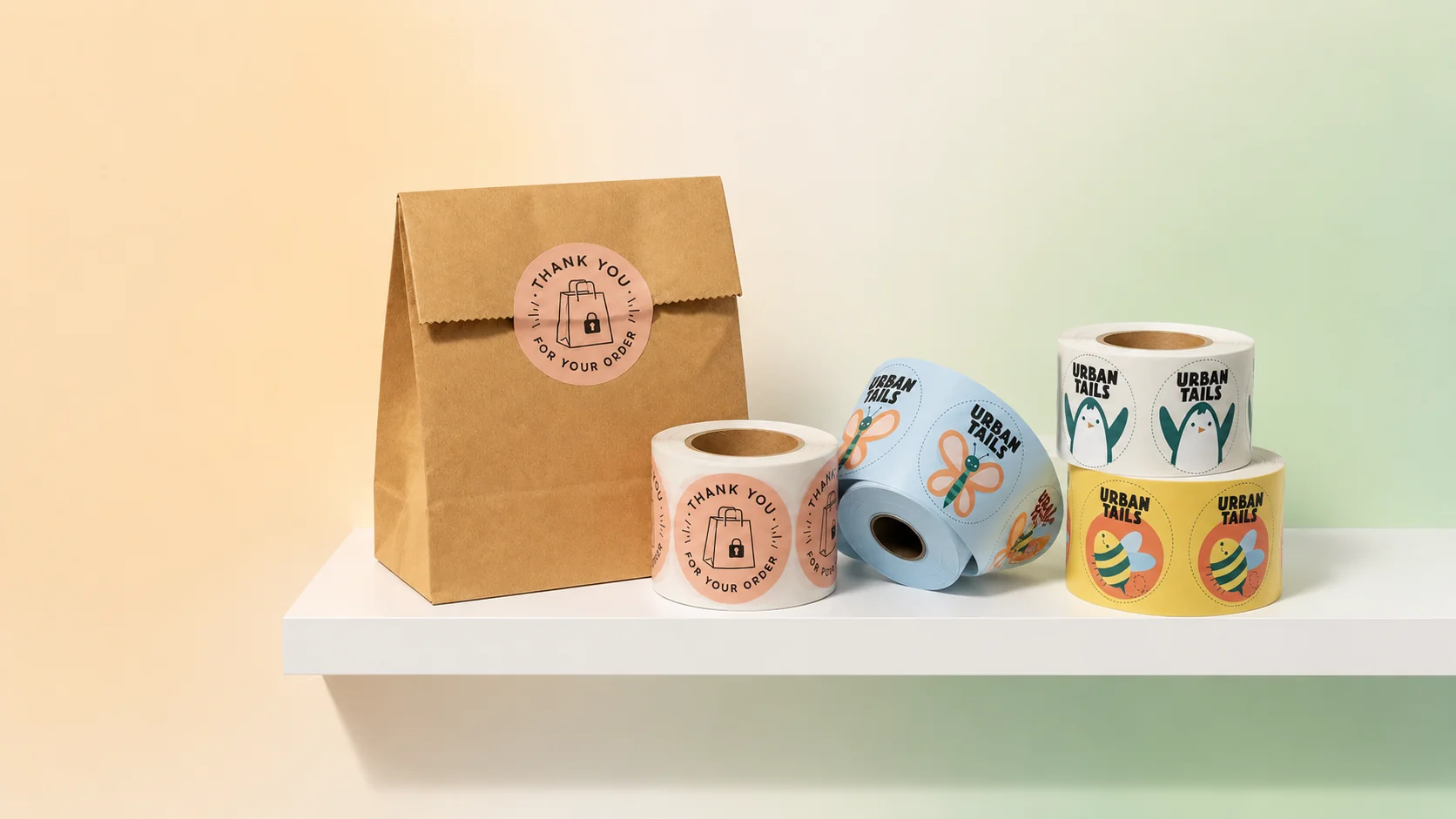
| Labels and stickers | Seals, pastry flags, retail bean bags | Medium — sharp detail for flavor names and compliance text |
You do not need to customize everything at once. Many successful cafes brand bags and sleeves first, then add cups when volume justifies another SKU.
Explore the Coffee Shops industry page for product ideas matched to cafe workflows.
Choosing Materials for Cafe Beverages
Hot drinks demand food-safe, heat-appropriate materials:
- Paper cups with sleeves — widely used; sleeves reduce heat transfer and add branding space
- PLA or compostable cups — plant-based options where industrial composting is available; label disposal clearly
- Kraft takeout bags — strong, recyclable, and printable for logos and one-color brand marks
Match material claims to what your city supports. Our biodegradable and compostable materials guide explains the difference between recyclable kraft, PLA, and compostable fiber.
For dry goods and retail beans, pair kraft bags with custom labels for roast date, origin, and flavor notes.
Branding Priorities for Independent Cafes
Logo clarity at small sizes
Cafe logos must read on cup sleeves and small sticker formats. Simplify fine lines, avoid tiny taglines, and test scale in Ecoally's 3D editor before production.
Color contrast on kraft
Kraft paper absorbs ink differently than white board. Dark logos on natural kraft read artisan and eco-conscious; full-color designs may need white underprint or a switch to white board depending on product.
Seasonal campaigns without waste
Limited runs for pumpkin season, local artist collaborations, or a new single-origin launch are ideal for low MOQ packaging. Order what the season needs, then revert to core branding. Read why low MOQ matters for small food businesses.
QR codes and loyalty
Sleeves and bags offer space for QR codes linking to loyalty apps, tip pages, or Spotify playlists — high engagement for minimal design change.
Sample Cafe Packaging Workflow
- Audit your current order mix — If 70% of drinks are 12oz, start there for cups or sleeves.
- Pick one hero item — Branded paper bags often deliver the fastest visual upgrade for walk-out traffic.
- Design in 3D — Upload logo, set colors, review all panels. Design your first bag online.
- Order a small batch — Test print quality and customer reactions for two to four weeks.
- Expand the kit — Add sleeves, labels, or seasonal variants based on feedback.
Pairing Packaging with Cafe Operations
Speed of service: Pre-stacked sleeves and clearly marked cup sizes keep rush hours smooth — choose formats your baristas can grab instinctively.
Delivery and mobile orders: Bags with secure handles and tamper-evident stickers protect drinks in transit and reinforce brand on porch photos.
Retail shelf presence: Bean bags and merchandise benefit from cohesive bag + label systems that mirror your in-store aesthetic.
Frequently Asked Questions
What is the best first packaging item for a new cafe?
Most independents start with takeout bags or cup sleeves — large branding impact and flexible use across drink and pastry orders.
Can I order custom cafe packaging in small quantities?
Yes. Ecoally supports low MOQ on many products so you can test branding before scaling. See low MOQ packaging for small food businesses.
Are compostable cups right for every cafe?
Only if you can communicate disposal clearly and your area has appropriate compost infrastructure. Many cafes mix recyclable kraft bags with compostable or recyclable cup systems.
Can I preview designs before ordering cups and bags?
Yes. Use the 3D packaging editor to preview artwork on product shapes before samples or production.
Where do I browse cafe-specific products?
Visit Coffee Shops industry packaging or the full product catalog.
How often should cafes refresh packaging design?
Many cafes refresh seasonal sleeves or bags two to four times per year while keeping a consistent core logo. Low MOQ makes seasonal refreshes affordable without discarding thousands of units.
Custom coffee shop packaging is how independents look as polished as national chains — without chain-scale inventory. Start with one format, preview in 3D, and grow your branded kit as your menu and customer base expand.
Next step: Explore coffee shop packaging or browse all products.
Coordinating Packaging with Your Cafe Supply Chain
Ordering packaging should fit how you already buy cups, milk, and beans — not add a separate chaos layer.
Storage: Kraft bags and sleeves store flat; allocate one dry shelf near the bar flow. Avoid humidity that warps board-based cup carriers.
Vendor consolidation: Using one platform for bags, labels, and wraps simplifies reordering and keeps color consistency across SKUs. Browse the product catalog to compare compatible formats.
Reorder cadence: Track weekly bag and sleeve usage for two weeks, then set a reorder point two weeks ahead of peak season (summer iced drinks, holiday gift sets). Saved designs in Ecoally make repeat orders fast.
Local regulations: Some cities restrict single-use plastics or require recyclable takeout materials. Paper-first packaging often simplifies compliance — confirm current rules for your municipality when choosing cup and container formats.


